
Jason Rosario is one of those builders who doesn’t just talk about change — he creates the space for it to actually happen.
He is an Afro-Latino, Bronx-raised storyteller, father, and cultural leader whose work sits at the intersection of masculinity, mental health, identity, and community. Over the years, Jason has worked inside major media and creative organizations while also building something deeply personal and deeply needed outside of them.
That “outside” work became The Lives of Men.
Who He Is
Jason Rosario grew up in New York, raised by a Dominican mother, navigating life without consistent male role models and learning early how much pressure men carry in silence. That lived experience shows up everywhere in his work.
Professionally, he’s moved through media, marketing, and leadership roles focused on culture and inclusion. But what defines Jason most is not his résumé — it’s his willingness to speak honestly about fatherhood, emotional health, identity, and the internal work men are rarely encouraged to do.
He doesn’t present himself as an expert standing above the conversation.
He shows up as someone still in it.
What He Created: The Lives of Men
Jason founded The Lives of Men to create the space he wished existed when he was younger.
At its core, the platform is about healthy manhood, not the performative kind, not the hyper-masculine version, but something more grounded, reflective, and human.
The Lives of Men uses storytelling, conversation, wellness programming, and community gatherings to invite men — especially Black and brown men — to slow down and examine who they are becoming.
Jason often describes it as a compass rather than a rulebook.
There are no rigid answers.
Just better questions.
Why This Work Matters
For generations, men have been taught to suppress emotion, avoid vulnerability, and measure their worth through productivity or toughness. For men of color, those pressures are often compounded by racism, economic stress, and cultural expectations.
The Lives of Men challenges that quietly but firmly.
Jason speaks openly about therapy, depression that hides behind achievement, and the cost of emotional disconnection. His work helps men recognize that strength without self-awareness eventually collapses.
This platform doesn’t shame men into growth.
It invites them into it.
Why I ❤️ This Platform
There are a few reasons Jason’s work resonates so deeply with me.
Mental health is centered honestly.
This isn’t surface-level wellness language. Jason speaks from lived experience and names the realities men often avoid… shame, silence, overwork, emotional isolation.
Masculinity is redefined, not attacked.
The Lives of Men doesn’t tear men down to make a point. It creates space for evolution, accountability, and choice without judgment.
The storytelling feels real.
Nothing feels packaged or performative. Whether Jason is hosting conversations or sharing reflections, it reads and sounds like someone speaking from lived truth, not a script.
Afro-Latino leadership is visible and intentional.
Jason shows up fully as an Afro-Latino man. That representation matters — especially for men navigating layered identities who rarely see themselves reflected with nuance and dignity.
Community comes before clout.
This platform isn’t about building an audience. It’s about building connection. The Lives of Men creates spaces where men feel seen, heard, and supported — online and in real life.
Why You Should Pay Attention
If you care about:
mental health for men
leadership rooted in self-awareness
culture that values humanity over performance
community over ego
Jason Rosario and The Lives of Men deserves your attention.
This is not content made for scrolling.
It’s work meant for living.
And it’s exactly the kind of platform we need more of.
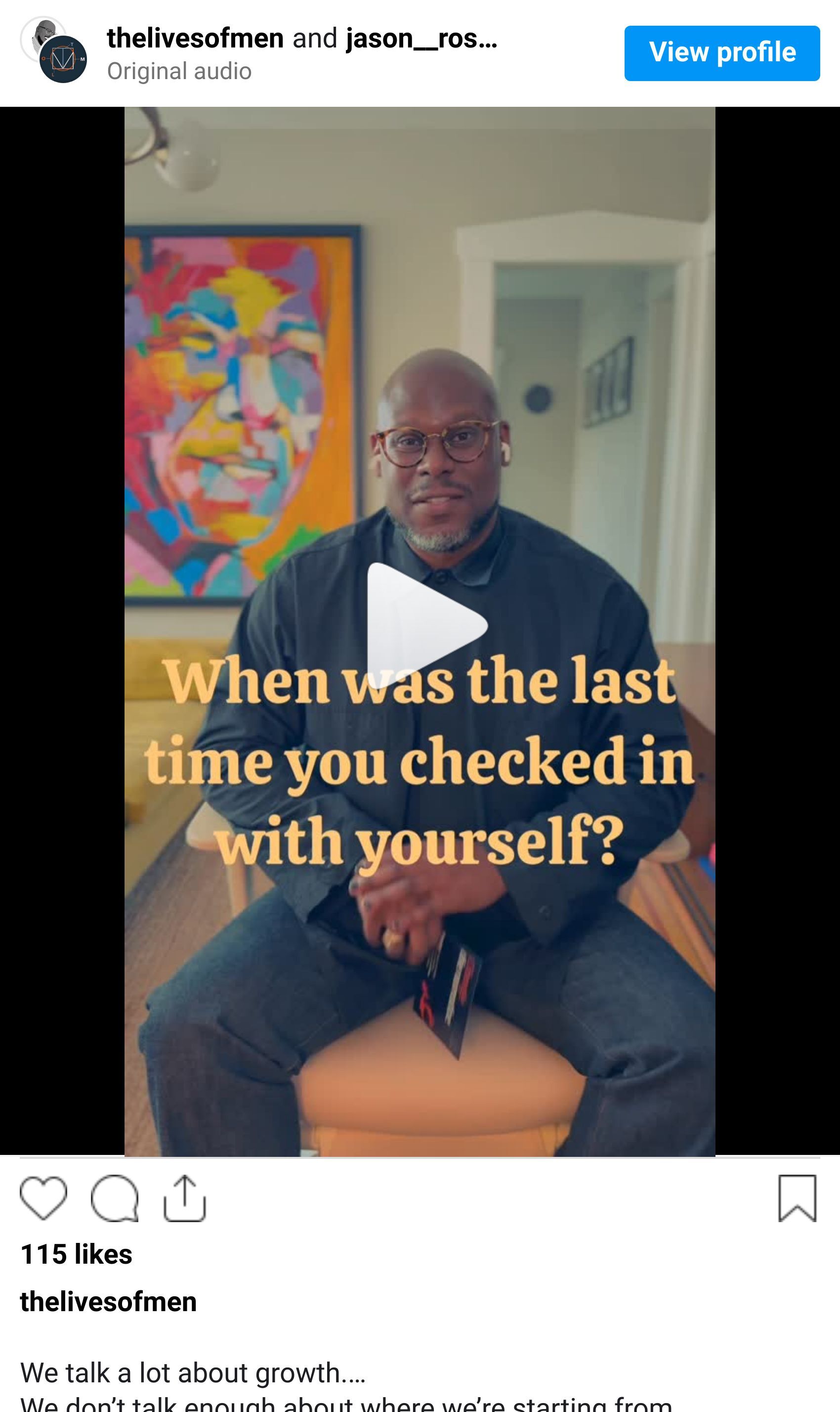
Connect with Jason
If Jason Rosario’s work resonates with you, take a moment to connect with him on social. His posts extend the same conversations found in The Lives of Men — reflections on mental health, identity, leadership, and what it looks like to grow without losing yourself. Following him is less about consuming content and more about staying in dialogue with the work of becoming a healthier, more grounded human.